
Cardboard Box Inserts
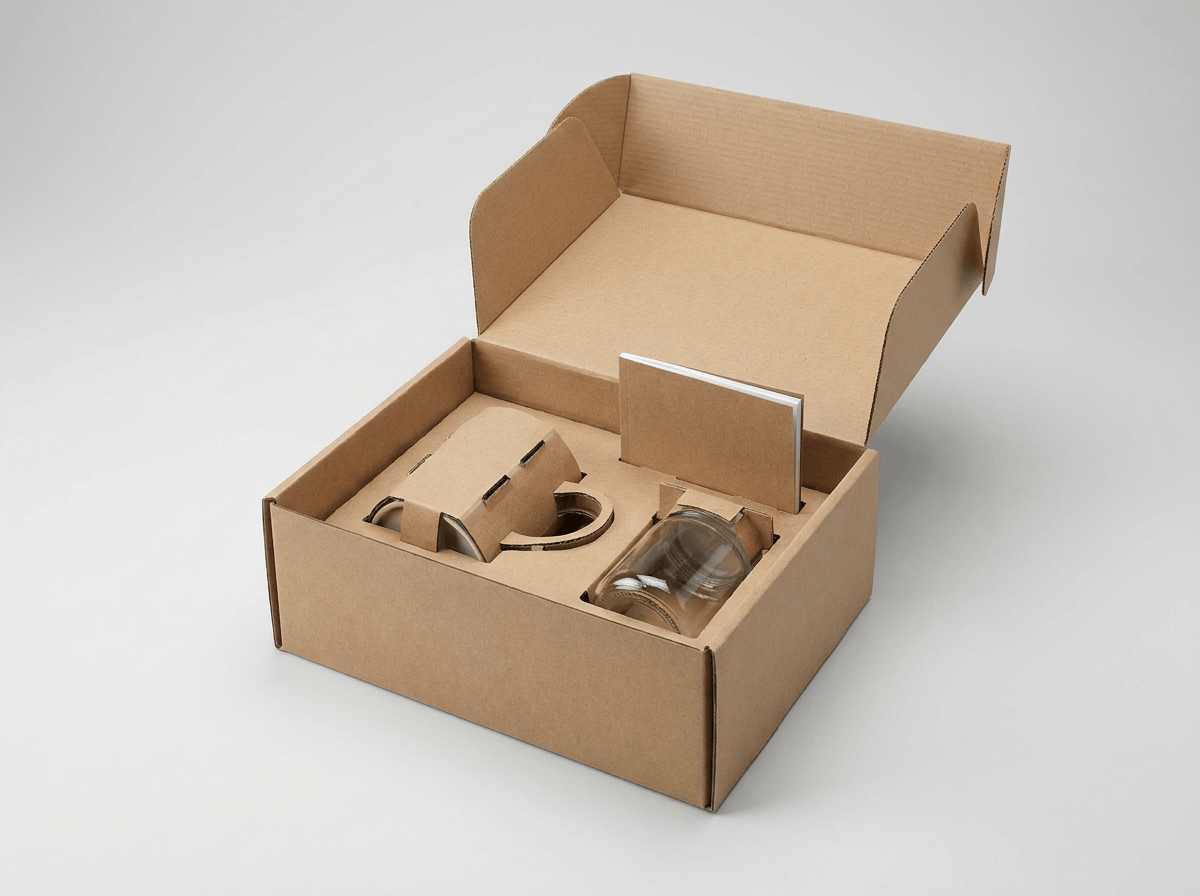
Die-cut cardboard inserts that hold product in place.
An insert stops a product from sliding and frames it on opening. We die-cut trays, dividers, and end caps from recyclable board to fit your item.
It's a plastic-free alternative to foam for most products.
- Trays, dividers and end caps
- Die-cut to your product
- Recyclable, plastic-free
- Holds product still in transit
“The magnetic boxes are the nicest thing about our subscription, and I say that as the person who makes the product. Zero damage across 3,000 shipments.”
“Mailers arrived in nine days with the inside print exactly as proofed. Our unboxing videos finally look like the brands we admire.”
Fiber where foam used to go
For most products, a die-cut board insert now does what foam did: hold the item centered, absorb the knocks, and stage the presentation when the lid opens. The difference shows after the unboxing. A corrugated or chipboard insert goes into the same recycling stream as the box, which means your packaging makes one claim instead of an asterisked one.
The honest limit: very heavy items, deep cavities and products needing millimeter-grip still favor EVA foam. Everything else, cosmetics, bottles, electronics accessories, kits, board handles well.
The three forms we cut
Platform trays hold a product in a die-cut aperture, raised above the box floor so it presents at the right height; the aperture grips by geometry, using folded tabs as springs. Dividers separate multiples, the same principle as our box dividers but cut to the retail box. End caps cradle the two ends of a larger item, leaving the middle visible, the standard approach for framed prints, small appliances and bottles in gift presentation.
Forms combine: a tray for the hero product with a divided well for accessories is the default subscription-kit architecture.
Design and iteration
Board inserts need no tooling in short runs; they cut on the same digital table as the sample, which makes iteration cheap. Send the product, we prototype the insert, you drop-test it with your real item, and adjustments cost a file revision rather than a new die. At volume, a cutting die takes over and unit cost falls sharply. Insert and box should be engineered together, one job, one tolerance chain, and we quote them as a pair on the packaging inserts line.
Kraft or white?
Kraft is cheaper and hides handling; white reads premium and shows the product harder. Printed inserts, a pattern or message under the product, cost little extra in digital runs.