
Rigid Mailers
Flat, crush-resistant rigid mailers that protect prints, photos and documents.
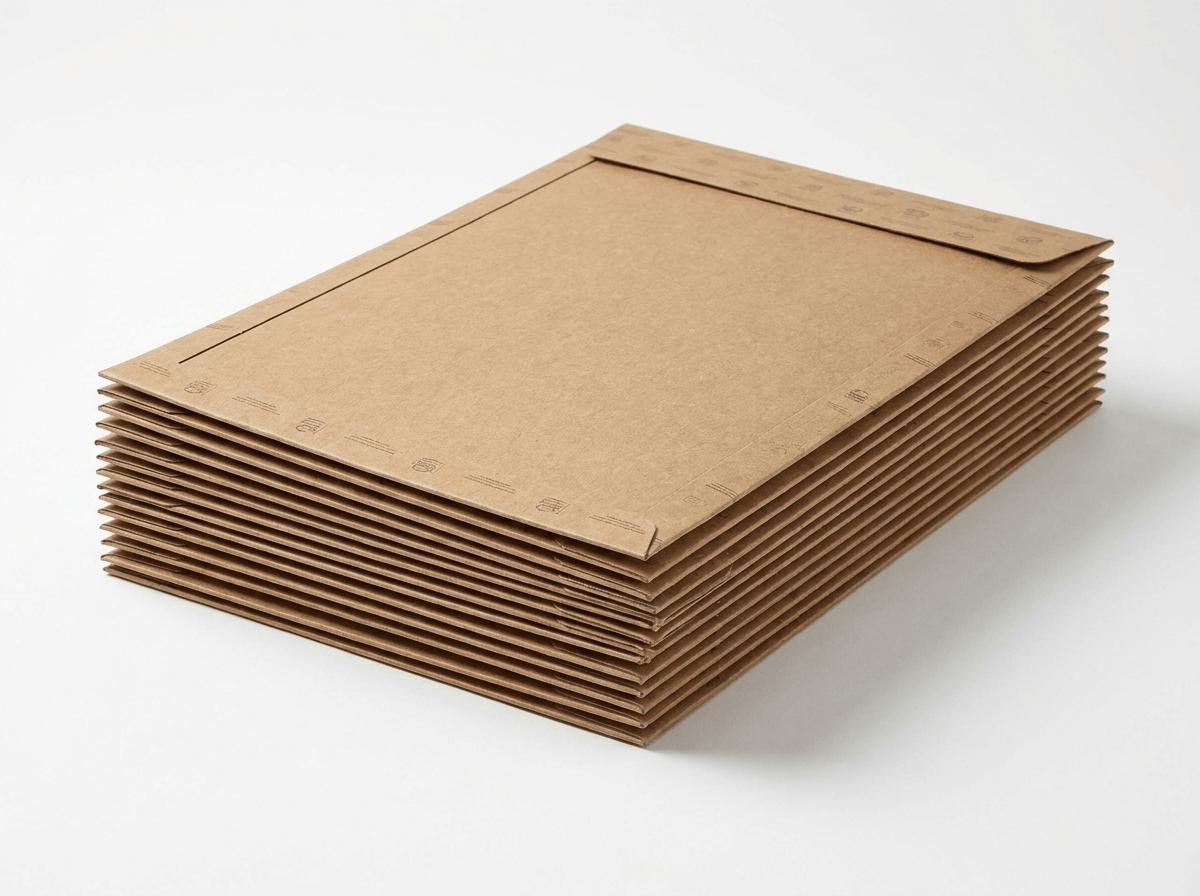
Rigid mailers keep flat goods flat. The stiff board resists the bends and creases that ruin a print or a signed document on its way through the post.
- Crush-resistant chipboard core that will not fold in the mail
- Peel-and-seal adhesive strip for tape-free closing
- "Do not bend" and full-color branding printed on the face
- Sized for A4, photo prints, art cards and certificates
Add a peel-and-seal strip and your logo, and the mailer doubles as packaging and marketing.
“Mailers arrived in nine days with the inside print exactly as proofed. Our unboxing videos finally look like the brands we admire.”
“The magnetic boxes are the nicest thing about our subscription, and I say that as the person who makes the product. Zero damage across 3,000 shipments.”
Rigid mailers that keep flat goods flat
A photographer ships a signed print to a collector, drops it in the mail, and it arrives with a soft crease running diagonally across the image. The print is ruined, the sale is refunded, and the reputation takes a hit. All of it avoidable for a few cents. A rigid mailer is the stiff board envelope built to make exactly that disaster impossible. It does not fold, it does not crease, and whatever flat thing you put inside arrives the way it left.
Rigid mailers (also called stay-flat mailers or rigid envelopes) are flat mailers built around a crush-resistant chipboard core. The stiffness is the whole product. Where a paper envelope flexes and bends through the postal system, a rigid mailer resists the rollers, the bins, and the careless handling that creases flat goods. A peel-and-seal strip closes it without tape.
Who uses rigid mailers
Photographers and print sellers shipping prints and photos. Artists mailing art cards and limited editions. Schools, certification bodies, and HR departments sending diplomas and certificates. Stationery and greeting card brands. Anyone mailing documents, contracts, or signed paperwork that cannot arrive folded. Trading card and collectible sellers use them for graded cards and slabs that must stay protected and flat.
The common thread is a flat, relatively thin item with real value, monetary or sentimental, that a crease would damage. If bending it would lower its worth, it belongs in a rigid mailer rather than a soft envelope.
Materials and construction
The core is a stiff chipboard that resists folding, faced with kraft or white printable liner. Construction options include:
- Self-seal rigid mailers with a peel-and-seal adhesive strip for tape-free closing
- Kraft rigid mailers for a natural, recyclable look
- White rigid mailers for a bright, fully printable face
- Rigid photo mailers sized and padded specifically for prints
Some builds add a light foam or fluted liner for extra cushioning on fragile flat items. The closure flap folds over and the adhesive strip seals it shut, and the chipboard does the rest. For USPS, the rigidity also helps the mailer hold its do-not-bend protection through automated sorting.
Sizes and how to choose
Rigid mailers are sized to common flat formats. Standard sizes fit A4 and letter documents, 4×6 in and 5×7 in photo prints, larger art cards, and certificate sizes. Pick a mailer that fits your item with a little clearance so it slides in flat without forcing, but not so much room that it shifts around inside.
If you are shipping something thicker, like a stack of prints or a framed item, size up to a build with more depth and added cushioning. Tell us the dimensions and we will point you to the right size, or cut a custom size for a non-standard format.
Printing and finishes
The flat face of a rigid mailer is prime branding space. Print your logo and a do-not-bend message in full color so the mailer protects the contents and markets your brand at the same time. The clean, large surface reads well, which is why so many print and photo sellers treat the mailer as part of the customer experience rather than just packaging.
Keep finishes simple. A printed kraft or white face with a clean logo is the standard, since the mailer is a shipping item and heavy laminates add cost without much benefit here.
Minimum order, turnaround, and how ordering works
The minimum is 30 units, so a photographer, an artist, or a small print shop can order a branded batch without committing to thousands. That low floor suits the kind of seller who ships flat goods in modest, steady volume.
Turnaround is about 10 days from approved artwork. Send your logo and any do-not-bend messaging, we proof it, you approve, and we print and make the mailers. Per-unit pricing drops with volume, so larger runs bring the cost down while keeping the custom print.
Sustainability
Chipboard and kraft liner are paper-based, recyclable, and available with recycled content. A kraft rigid mailer with water-based ink recycles curbside the way a corrugated box does. Choosing a self-seal paper strip over plastic packaging tape keeps the whole mailer in the paper recycling stream.
Frequently asked questions
What is a rigid mailer used for?
Shipping flat items that must not bend: prints, photos, certificates, art cards, documents, and graded trading cards. The stiff core keeps them flat through the postal system.
What is the difference between a stay-flat mailer and a rigid mailer?
They are the same thing. Stay-flat is just a descriptive name for a rigid mailer, referring to its job of keeping the contents flat.
Do rigid mailers work with USPS?
Yes. The rigidity helps protect the contents through automated USPS sorting, and a printed do-not-bend message signals the handling you want.
Can I get kraft rigid mailers with my logo?
Yes. Kraft rigid mailers are popular for their natural, recyclable look, and we print your logo and do-not-bend message directly on the face.
How is this different from a corrugated mailer box?
A rigid mailer is a flat envelope for flat goods. A mailer box is a folding box for three-dimensional products. Different shapes for different items.
What sizes do rigid mailers come in?
Standard sizes fit A4 and letter documents, 4×6 in and 5×7 in photo prints, larger art cards, and certificate formats. We also cut custom sizes for non-standard items.
Packing flat goods well
The mailer does most of the work, but how you pack it still matters. Slip a print or document into a clear sleeve before it goes in the mailer, so it is protected from moisture as well as bending. Position the item flat and centered, and avoid stacking more than the mailer is rated for, since over-stuffing can bow even a stiff board. A peel-and-seal strip closes it cleanly without tape, which keeps the face print intact and gives the recipient a tidy open. For valuable prints and signed pieces, that small bit of care is the difference between a happy collector and a refund.
Order a sample to feel the board and seal, or get an instant quote with your size and quantity.