

Standard bookmark sizes: every dimension explained

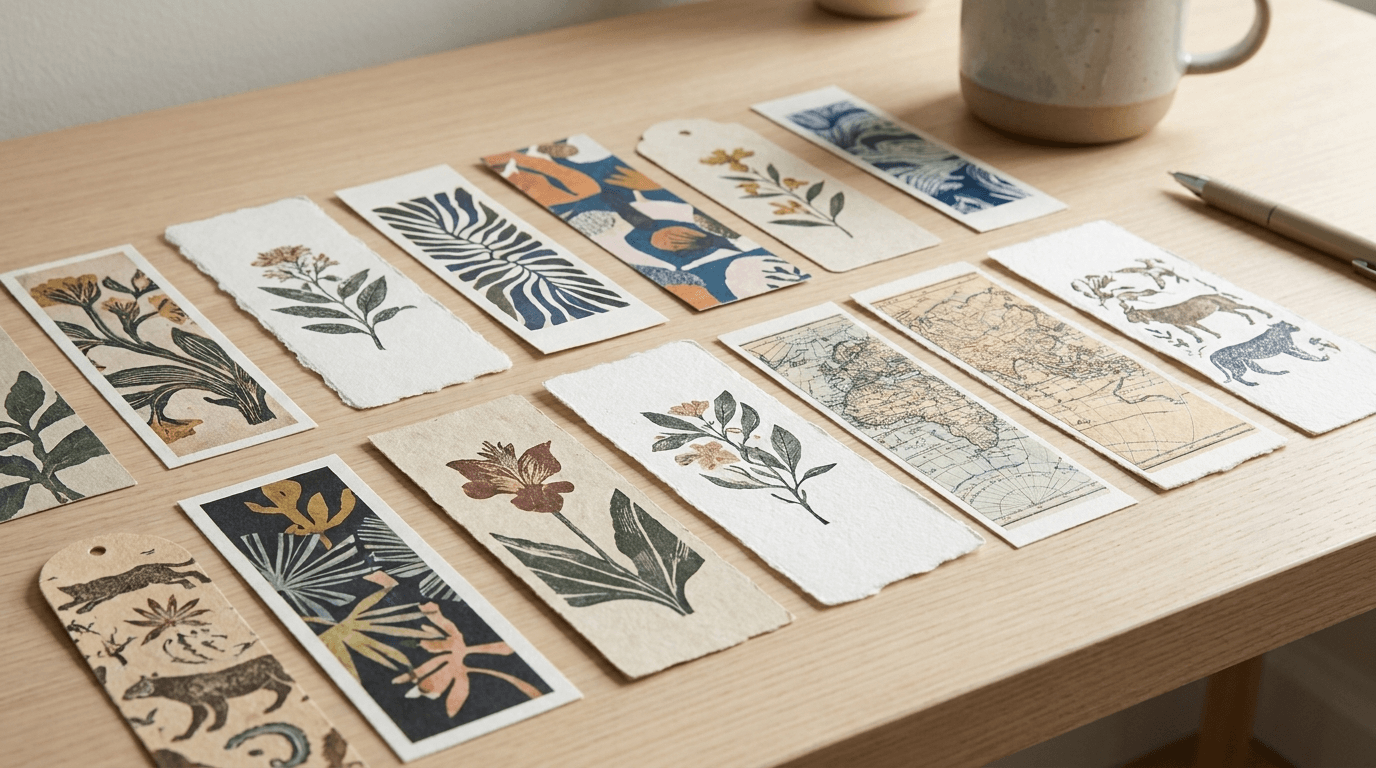
There is no legal or official bookmark size, but the print industry has settled on a small set of standard dimensions. Working to one of them means your bookmark fits a book, prints without wasting stock, and slips into a standard sleeve if you sell them. This guide covers every common size, when to use each, and exactly how to set the artwork up so it prints clean the first time.
The standard bookmark size
The most common bookmark is 2 x 6 inches (about 51 x 152 mm). It is the default for a reason: long enough to stand proud of a paperback so you can find your page, narrow enough that it does not splay the spine, and it cuts efficiently from a standard press sheet with almost no waste. If a printer or a template says "standard bookmark" with no other detail, it means 2 x 6.
That size also fits the standard cellophane bookmark sleeves and most retail displays, which matters if you are producing them to sell rather than give away.
Every common bookmark size
Here are the sizes you will actually meet, width x height, with the rough metric equivalent and where each fits:
- 2 x 6 in (51 x 152 mm) — the standard, all-purpose bookmark
- 2 x 7 in (51 x 178 mm) — a little longer, popular for hardcovers and larger trade books
- 2 x 8 in (51 x 203 mm) — a tall bookmark with extra room for artwork or a vertical photo
- 1.5 x 7 in (38 x 178 mm) — a slim, elegant bookmark that uses less stock
- 2.5 x 8.5 in (64 x 216 mm) — an oversized, premium bookmark; also the size of a folded-in-half A4-ish promo piece
- 2 x 2 in (51 x 51 mm) — a mini or square bookmark, often a promo giveaway
- 1.5 x 2 in — a corner bookmark blank before it is die-cut into a triangle
If you are matching a specific book, measure the book's page height and subtract about an inch so the bookmark tucks in without poking out awkwardly at both ends.
Sizes by bookmark type
Different bookmark styles start from those footprints:
- Standard flat bookmark: 2 x 6 or 2 x 7, printed on card.
- Corner bookmark: cut from a 2 x 2 or larger square, folded and die-cut into a triangle that slips over the page corner.
- Magnetic bookmark: a strip roughly 1 x 6 in folded in half (finished ~1 x 3) with two magnets that clip over the page.
- Rack card / long bookmark: 3.5 x 8.5 in blurs the line between a bookmark and a rack card; useful when you need real marketing copy.
- Tasseled bookmark: any of the above with a punched hole and a tassel or ribbon at the top; leave 3/8 in of clear space at the top for the punch.
Stock: what to print bookmarks on
A bookmark gets shoved in and out of a book for years, so it needs a heavier stock than a flyer:
- 14pt card — the practical minimum; sturdy enough for everyday use
- 16pt card — the common choice, stiffer and more premium
- 18pt or 100 lb cover — a thick, luxurious bookmark that resists bending
Lamination makes a real difference to lifespan. A matte or gloss laminate protects the ink and stops the corners from fraying; soft-touch laminate gives a suede feel that suits a premium giveaway. Uncoated stock feels natural and takes a pen (handy for signed author bookmarks) but wears faster.
Setting up the artwork
Get these three things right and the file prints correctly:
- Bleed: extend any background color or image 1/8 inch (0.125 in) past every edge, so there is no white sliver after cutting.
- Safe zone: keep text and logos at least 1/8 inch inside the trim line. On a 2 x 6 bookmark that leaves a generous 1.75 in printable width.
- Resolution: set images to 300 DPI at final size, or they print soft.
If you are adding a hole and tassel, keep the top 3/8 inch clear of important content so the punch does not clip it.
Finishing options worth considering
- Rounded corners (typically a 1/4 in radius) look finished and resist bending
- Foil stamping on a title or logo for a premium author or brand bookmark
- Spot UV to make one element glossy against a matte field
- Double-sided print — the back is free real estate for a book blurb, a QR code, or a discount
Printing bookmarks affordably
Because they are small, bookmarks "gang up" on a press sheet, many to a sheet, so short runs stay cheap and large runs get very cheap per piece. If you are producing them alongside other print, our paper tags and stickers and labels run on the same card stocks and finishes, so you can batch an order. For box and print dimensions generally, see our length, width, height guide.
Frequently asked questions
What is the most common bookmark size?
2 x 6 inches. It fits most books, prints with minimal waste, and matches standard sleeves and displays.
What size is a bookmark in cm?
The standard 2 x 6 in bookmark is about 5 x 15 cm (51 x 152 mm).
What stock should a bookmark be printed on?
14pt to 16pt card is standard; 18pt for a premium feel. Add lamination so it survives daily use.
How much bleed does a bookmark need?
1/8 inch (0.125 in) on every side, with text kept 1/8 in inside the trim.
What is the best size for a corner bookmark?
Start from a 2 x 2 in (or slightly larger) square, which folds and die-cuts into a triangle that fits a standard page corner.
The short version: the standard bookmark is 2 x 6 inches on 14–16pt laminated card with a 1/8 in bleed, and every other size is a deliberate variation on that.
Related reading
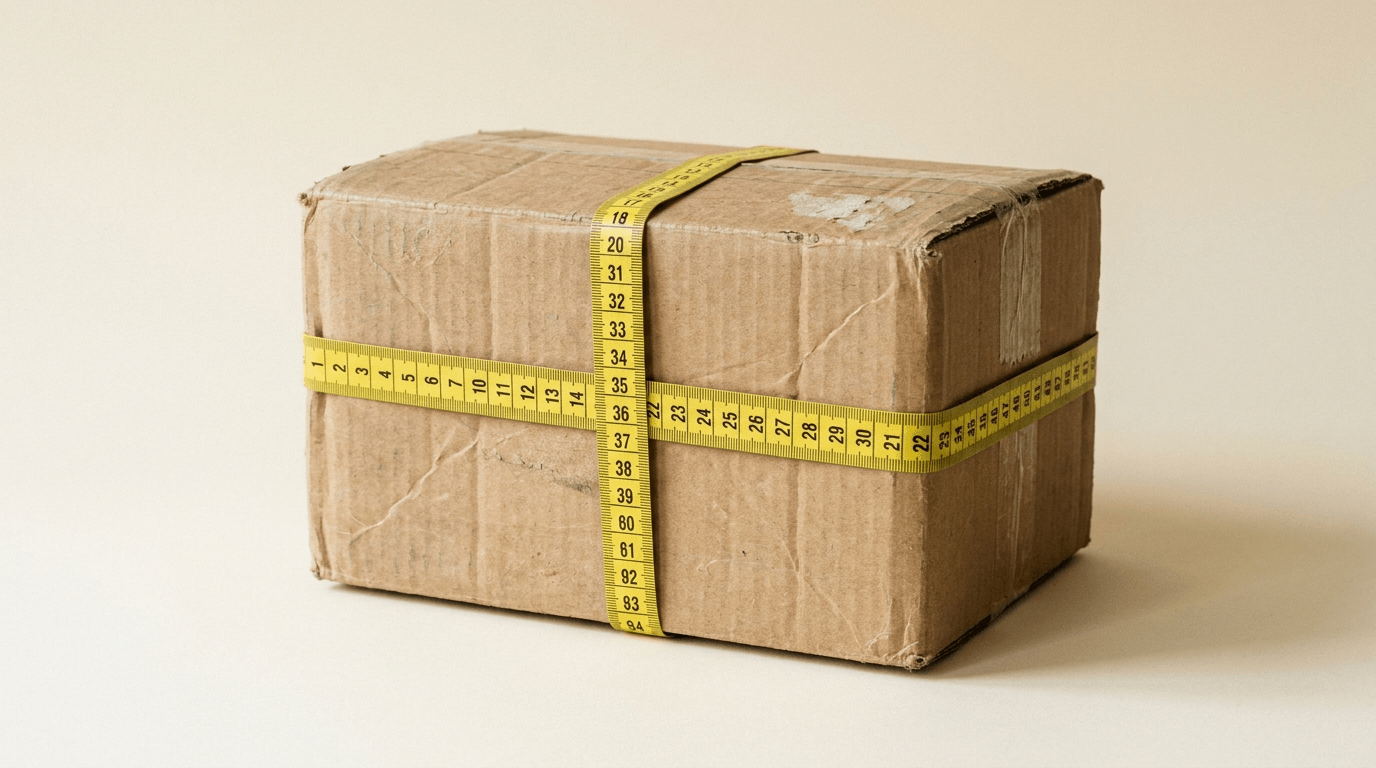
How to measure the girth of a box (with the formula)
Girth = 2 x (width + height); carriers bill on length + girth. Here is the formula, worked examples, USPS/UPS/FedEx limits, and how to avoid oversize fees.

Trifold brochure layout guide: panels, folds, and sizes
A trifold has 6 panels and the fold-in panel must be ~1/16 in narrower. Here are exact panel sizes for letter, legal and A4, fold types, margins, bleed and setup.
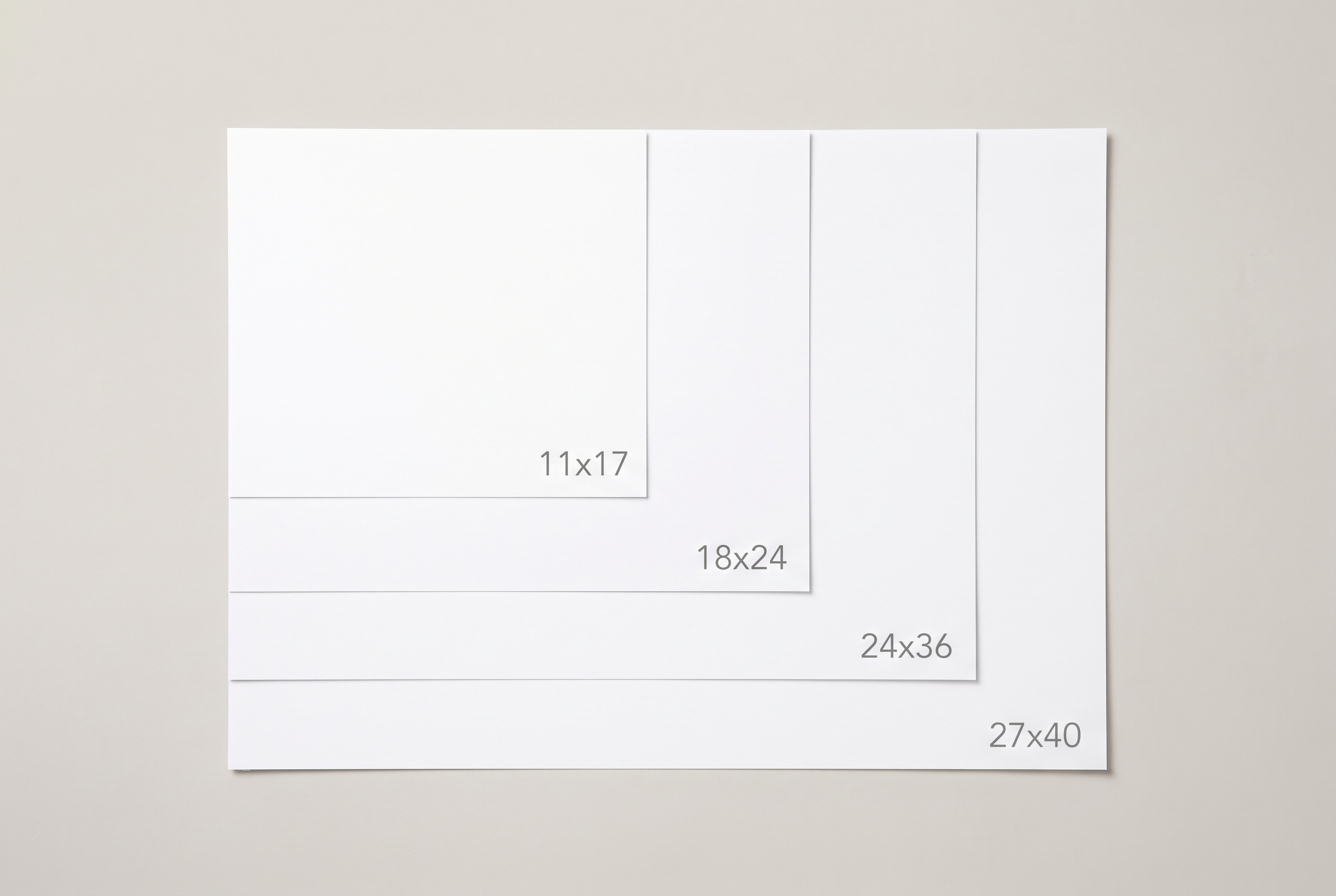
Standard poster sizes: which one to use and when
The standard poster sizes and where each one fits: 11×17, 18×24, 24×36 and 27×40. Dimensions in inches and cm, plus how to set your file so it prints sharp.
Ready to print your packaging?
Get an instant quote in minutes — low minimums, fast turnaround, and finishes that make your brand pop.