

How to measure the girth of a box (with the formula)

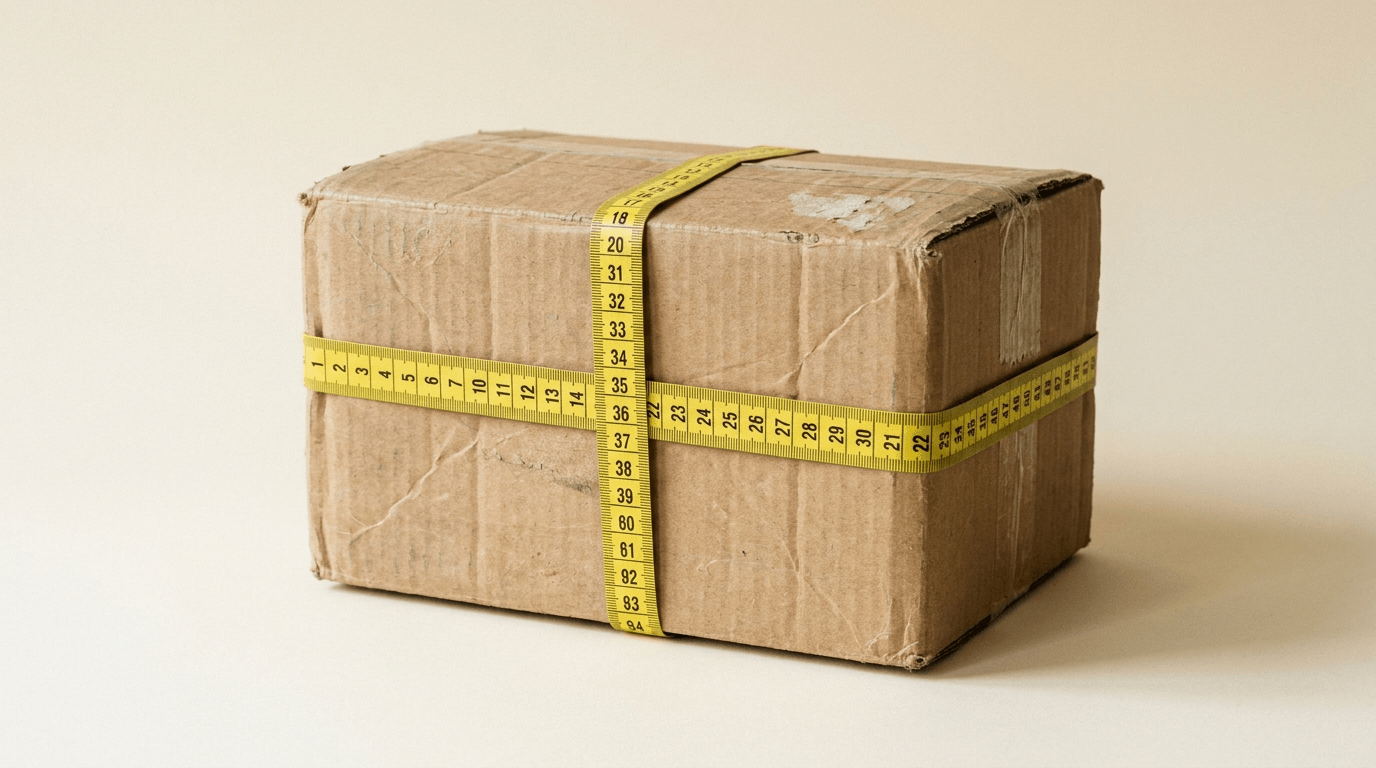
Carriers do not just charge by weight. For large or long parcels they price on length plus girth, and if you cannot measure girth you cannot predict the shipping cost, or even tell whether a box is shippable at all. A long, light box can sail under the weight limit and still trigger a large surcharge because of its girth. Here is exactly how to measure it, with the carrier limits that decide the bill.
What "girth" actually means
Girth is the distance around the thickest part of the box — imagine wrapping a tape measure around the parcel, not along its length. In practice that is the two smaller dimensions added together and doubled. The longest side is not part of girth; it is measured separately as the "length."
The formula every carrier uses is:
Girth = 2 x (width + height)
where length is the single longest edge, and width and height are the other two edges.
How to measure girth, step by step
- Set the box down and identify the longest edge. That is the length. Measure and note it; it is not used in the girth calculation itself.
- Measure the remaining two edges — call them width and height.
- Add width + height.
- Multiply that total by 2. The result is the girth.
- For carrier limits and surcharges, add length + girth together. That combined number is what the carrier checks.
Round each measurement up to the next whole inch, because that is how carriers round, and measure the box as it ships (bulging or irregular boxes are measured at their widest point).
Worked examples
Example 1 — a long, thin box, 30 x 12 x 10 in:
- Length = 30 in
- Girth = 2 x (12 + 10) = 2 x 22 = 44 in
- Length + girth = 30 + 44 = 74 in (well within limits)
Example 2 — a big cube, 24 x 24 x 24 in:
- Length = 24 in
- Girth = 2 x (24 + 24) = 2 x 48 = 96 in
- Length + girth = 24 + 96 = 120 in (this is into surcharge territory for most carriers)
Example 3 — a very long box, 60 x 8 x 8 in:
- Length = 60 in
- Girth = 2 x (8 + 8) = 32 in
- Length + girth = 60 + 32 = 92 in, but the 60 in length alone may trip a "length" surcharge even though the total looks moderate.
The carrier limits that matter
Combined length + girth is what pushes a parcel from standard to oversized:
- USPS: most services cap at 108 in (length + girth). Retail Ground allows up to 130 in with an oversized price. Over the cap, it is not accepted as a standard parcel.
- UPS: ships up to 165 in (length + girth), but over 130 in it is a "Large Package," and packages over about 96 in in length or over 130 in total get large-package and additional-handling surcharges that can add tens of dollars per box.
- FedEx: mirrors UPS closely — up to 165 in total, with oversize and additional-handling fees kicking in past 130 in (and at length thresholds around 48–96 in depending on service).
The practical takeaway: a box can be light and still expensive. Girth is often what does it.
Dimensional weight is the other half
Even under the size caps, carriers bill the greater of actual weight and dimensional (DIM) weight. DIM weight = (L x W x H) / a divisor (commonly 139 for domestic in inches/pounds). A big, light box gets charged on its volume, not its scale weight, which is the same reason right-sizing a box saves money.
How to reduce girth and avoid fees
- Right-size the box. A box cut to the product, with just enough clearance for fill, keeps length + girth down. See our cut-to-size boxes.
- Reshape the parcel. Two smaller boxes sometimes ship cheaper than one that crosses a surcharge threshold.
- Pick the flute for the load, not extra bulk. Our corrugated boxes guide covers matching strength to weight without oversizing.
- Measure before you design. Knowing your length + girth target up front lets you design the box under the surcharge line.
For the length/width/height convention behind all of this, see our dimensions guide.
Frequently asked questions
What is the formula for girth?
Girth = 2 x (width + height). Length is the longest side and is measured separately.
Is girth the same as the total size?
No. Carriers use "length + girth" as the total size. Girth alone is just 2 x (width + height).
What is the maximum length + girth for shipping?
USPS caps most services at 108 in; UPS and FedEx accept up to 165 in but add surcharges over 130 in.
Does girth use the longest side?
No. The longest side is the "length." Girth uses only the two shorter sides.
Why is my light box so expensive to ship?
Almost always girth or dimensional weight. A long or bulky box crosses a size threshold even when it weighs little.
In short: girth is 2 x (width + height), carriers bill on length + girth, and keeping that combined number under the surcharge line is where the savings live.
Related reading

Trifold brochure layout guide: panels, folds, and sizes
A trifold has 6 panels and the fold-in panel must be ~1/16 in narrower. Here are exact panel sizes for letter, legal and A4, fold types, margins, bleed and setup.
Standard poster sizes: which one to use and when
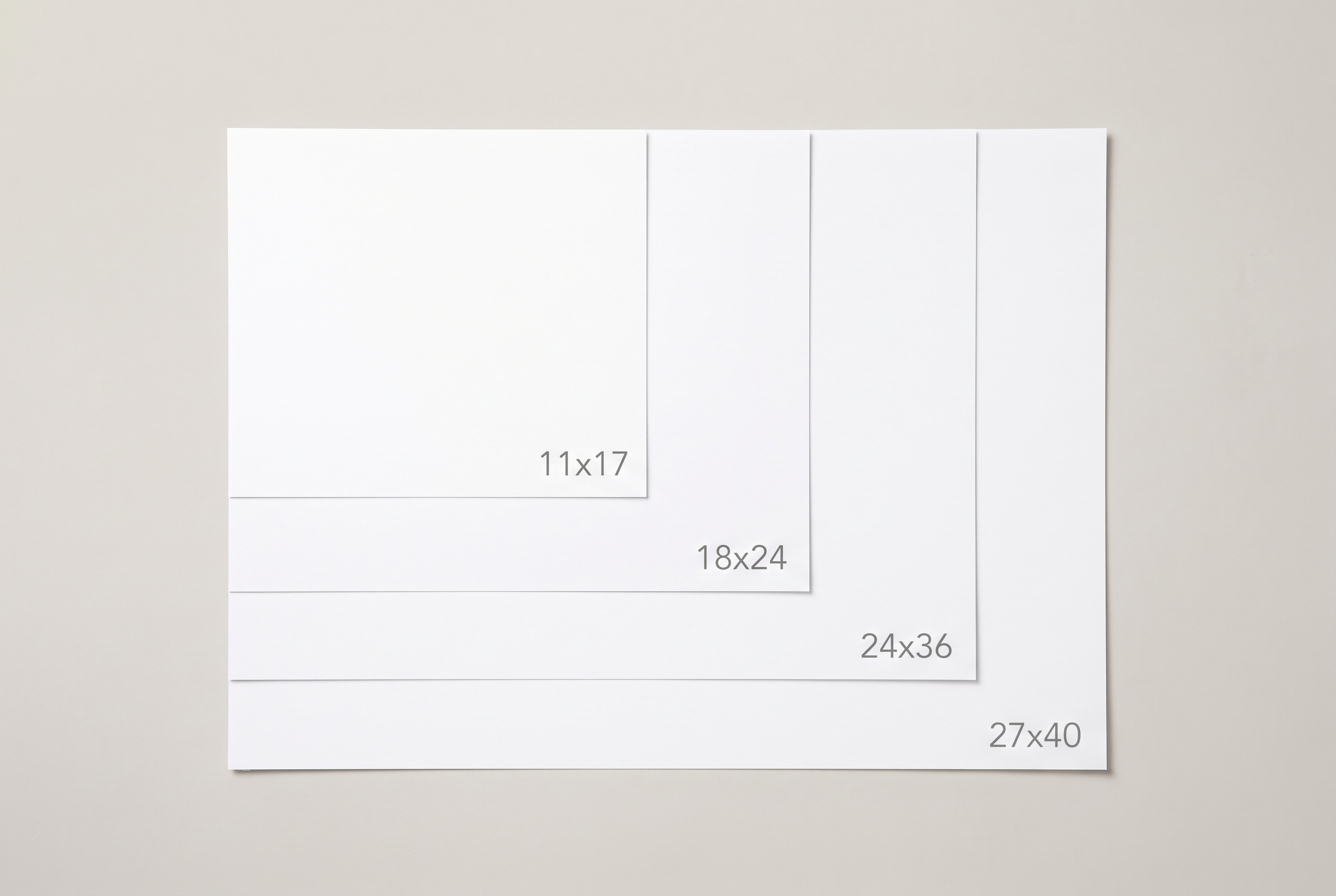
The standard poster sizes and where each one fits: 11×17, 18×24, 24×36 and 27×40. Dimensions in inches and cm, plus how to set your file so it prints sharp.
Amazon FBA label requirements: size, format and placement
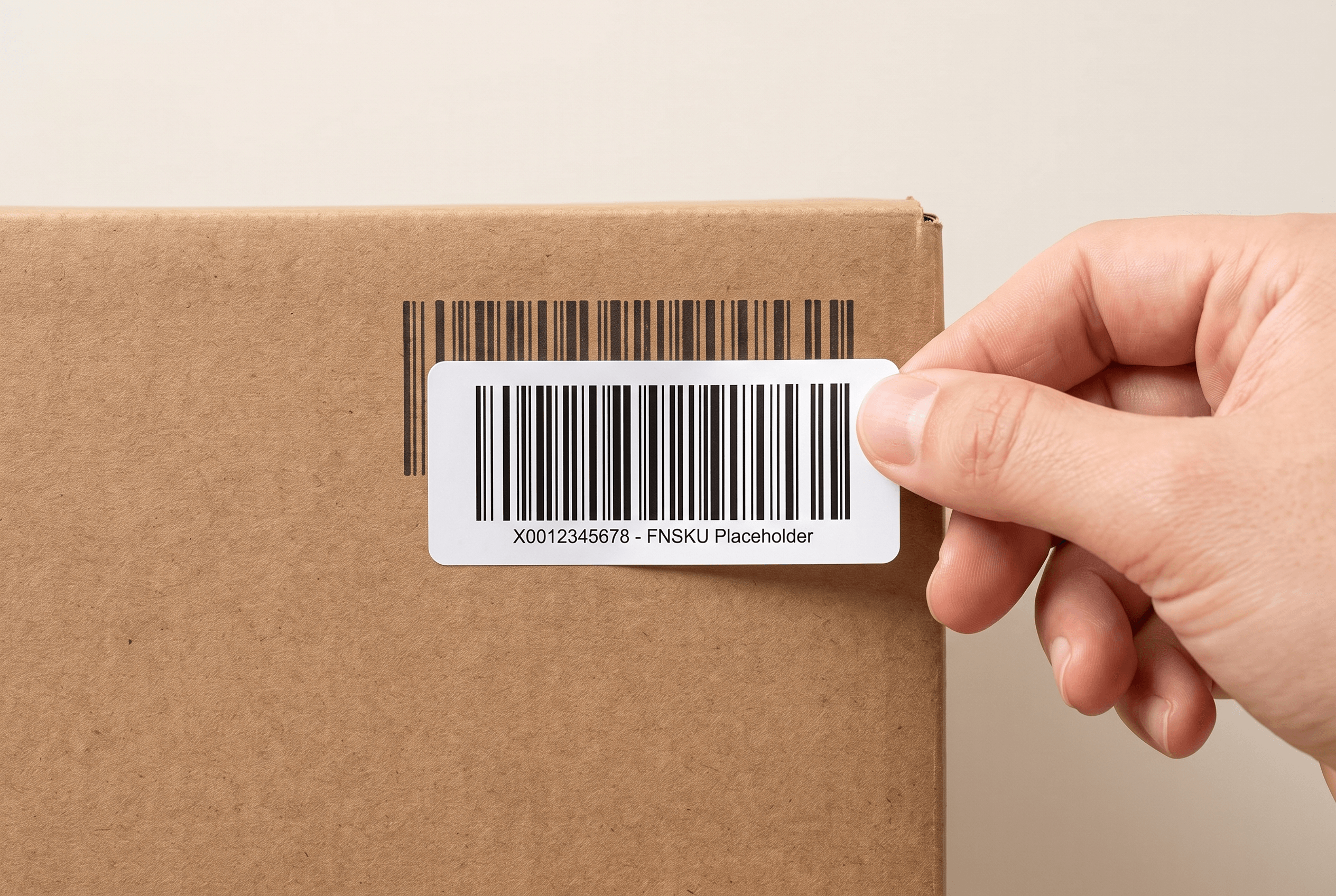
What Amazon requires of FBA labels: the 1×2 to 2×3 inch size, thermal or laser print, one FNSKU per unit over the old barcode, and the mistakes that get shipments held.
Ready to print your packaging?
Get an instant quote in minutes — low minimums, fast turnaround, and finishes that make your brand pop.