Mylar & Pouches
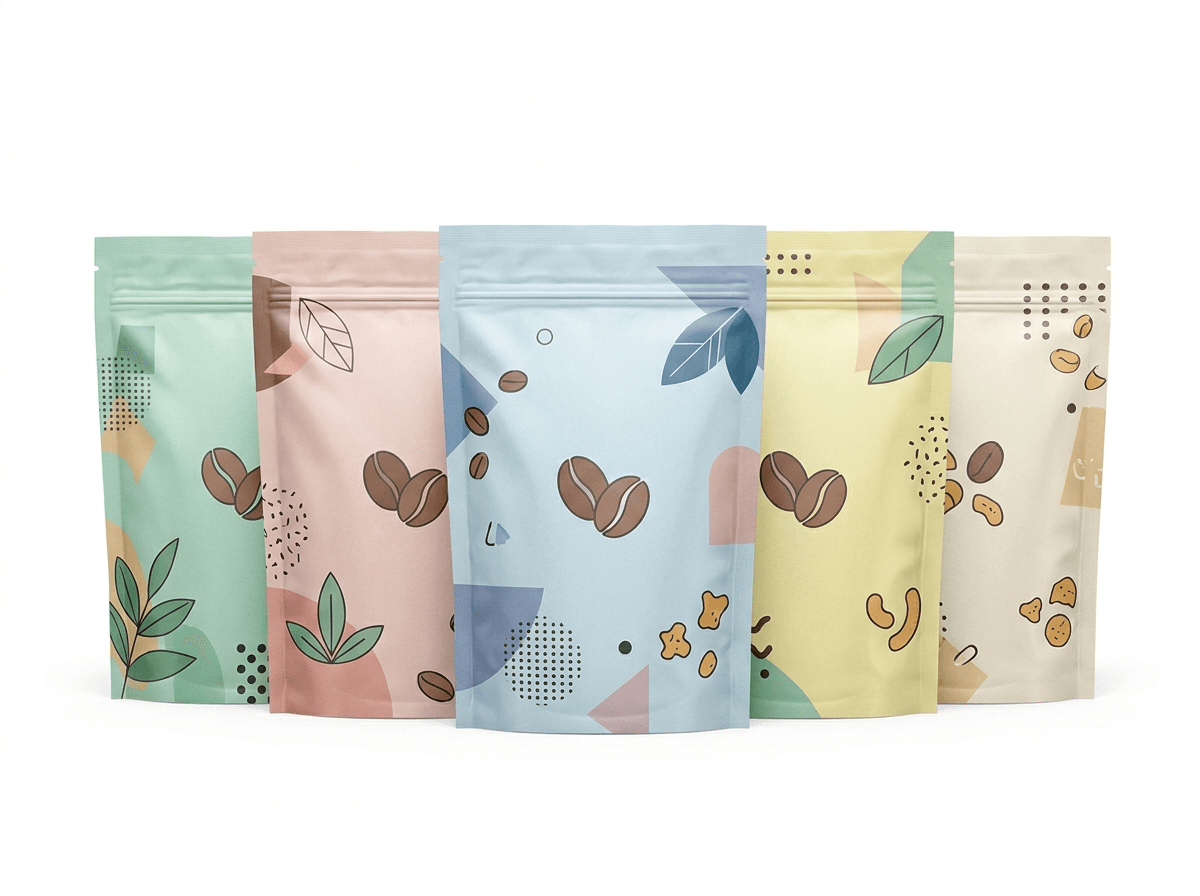
Resealable stand-up pouches with matte, gloss or kraft finishes.
“Low minimums were the whole reason we tried them. 250 pouches to test a flavor, then 5,000 when it took off — same bag, same print, no drama.”
“Our cakes travel 40 minutes across town and arrive looking like they left the counter. The window boxes sell them before anyone opens the lid.”
Mylar bags and stand-up pouches that keep product fresh and sell it too
Open a bag of specialty coffee that has been sitting on a shelf for two months and the smell that hits you is the whole pitch. That aroma survived because the mylar pouch around it blocked oxygen, light, and moisture, the three things that quietly ruin food, supplements, and botanicals. A pouch that protects the product and shows off a printed brand at the same time is doing two jobs that used to need a box and a liner.
Mylar bags are flexible pouches built from layered barrier film, usually a metallized or foil layer laminated between printable outer film and a heat-seal inner layer. That sandwich is what gives mylar its long shelf life. Stand-up versions add a gusseted bottom so the pouch sits upright on a shelf, which is why you see them everywhere from coffee to protein powder to pet treats.
Who uses mylar pouches
Coffee and tea brands, protein and supplement companies, snack and jerky makers, pet treat brands, spice and seasoning sellers, dried-goods and granola producers, and personal-care brands packing bath salts or powders. The format scales from a one-person kitchen operation to a national CPG line. If your product is consumable, granular, or needs to stay fresh, a mylar pouch is usually the most cost-effective and shelf-friendly way to package it.
Subscription and sample programs love them too, because a small flat pouch ships cheaply and a resealable stand-up pouch feels like a full retail product.
Materials and barrier construction
The film is chosen around what is inside. Common builds include:
- Foil-laminate barrier film for maximum oxygen and light blocking (best for coffee, anything that goes rancid)
- Metallized PET for strong barrier at lower cost
- Clear or window films when you want the product visible
- Kraft-look outer layer for a natural, earthy shelf presence
- Recyclable and compostable mono-material films for brands cutting plastic
Inside, a high-barrier layer protects shelf life; outside, you get a printable surface. For coffee specifically, we add a one-way degassing valve so freshly roasted beans can release CO2 without letting oxygen back in.
Formats and sizes
Pouches come in several formats, and the right one depends on the product:
- Stand-up pouches with a bottom gusset (the retail standard, sits upright)
- Flat pouches and sachets for samples, single-serve, and slim products
- Flat-bottom box pouches for a premium, squared shelf presence
- Spouted pouches for liquids and gels
Sizing runs from small sample sachets up through retail bag sizes for a half pound, one pound, and bulk fills. Tell us the fill weight or volume and we recommend the pouch size and gusset that holds it without slumping. Add a resealable zipper, a tear notch, a hang hole, or a tin tie depending on how the customer will use it.
Printing and finishes
Print full color across the whole pouch with digital or rotogravure, depending on run size. Finishes include:
- Matte (the soft, premium look most craft brands choose)
- Gloss for bright, saturated shelf pop
- Kraft for natural products
- Spot matte or gloss to highlight a logo
- Metallic effects using the foil layer showing through the print
Digital printing keeps short runs affordable, so you can launch a flavor or a limited edition without a plate charge.
Minimum order, turnaround, and how ordering works
The minimum is 30 units, which is low for printed barrier pouches. Most pouch suppliers want hundreds or thousands before they will run custom artwork, so testing a new flavor or product gets pricey fast. Starting at 30 lets you validate the pouch and the design before scaling.
Turnaround is about 10 days from approved artwork. Send your design (or a concept we help build), we proof it, you approve, and we print and make the pouches. Base pricing starts near $0.19 per unit and drops with volume, which is part of why pouches beat rigid containers on cost at scale.
Sustainability
Traditional mylar is a multi-layer film and harder to recycle, so if waste is a priority we offer recyclable mono-material and compostable pouch films that keep a usable barrier. They cost a little more and have slightly shorter shelf life than full foil, but for many dry products the trade is worth it. We will walk you through which film fits your product and your sustainability goals.
Frequently asked questions
What is a mylar bag actually made of?
Layered film: a printable outer layer, a barrier layer (foil or metallized PET) that blocks oxygen, light, and moisture, and a heat-seal inner layer. The layers are laminated together for strength and shelf life.
Can I get resealable mylar pouches?
Yes. A press-to-close zipper, a tin tie, or a tear-notch-and-zip combination all keep the product fresh after the first open. The zipper is the most common for retail.
Do mylar pouches work for coffee?
They are the standard for coffee. Add a one-way degassing valve and a foil barrier and freshly roasted beans stay fresh while releasing CO2 safely.
Are there recyclable or compostable options?
Yes. We offer recyclable mono-material and compostable films for brands reducing plastic, with the trade-off being slightly shorter shelf life than full foil laminate.
What is the smallest order you will print?
30 units. That low minimum is built for launching a new flavor or testing a product before a full production run.
How do I know what size pouch I need?
Tell us the fill weight or volume of your product and we match it to a pouch size and gusset that holds it without slumping. A pouch that is too big looks half-empty on the shelf; too small and it will not seal cleanly.
Filling and sealing
A pouch is only as good as its seal. If you are filling by hand, leave enough headspace at the top for a clean heat seal, and keep product off the seal area so nothing contaminates the bond. For automated filling lines, we match the film and seal layer to your equipment so the pouch runs without jamming or weak seals. A weak seal lets air back in and undoes the whole point of a barrier pouch, so it is worth getting the fill process dialed in alongside the packaging itself. Send us your fill method and we will recommend the right seal layer for it.
Order a sample pack to handle the film and finishes, or get an instant quote with your fill weight, format, and quantity.