

Yard sign sizes: which size actually gets read

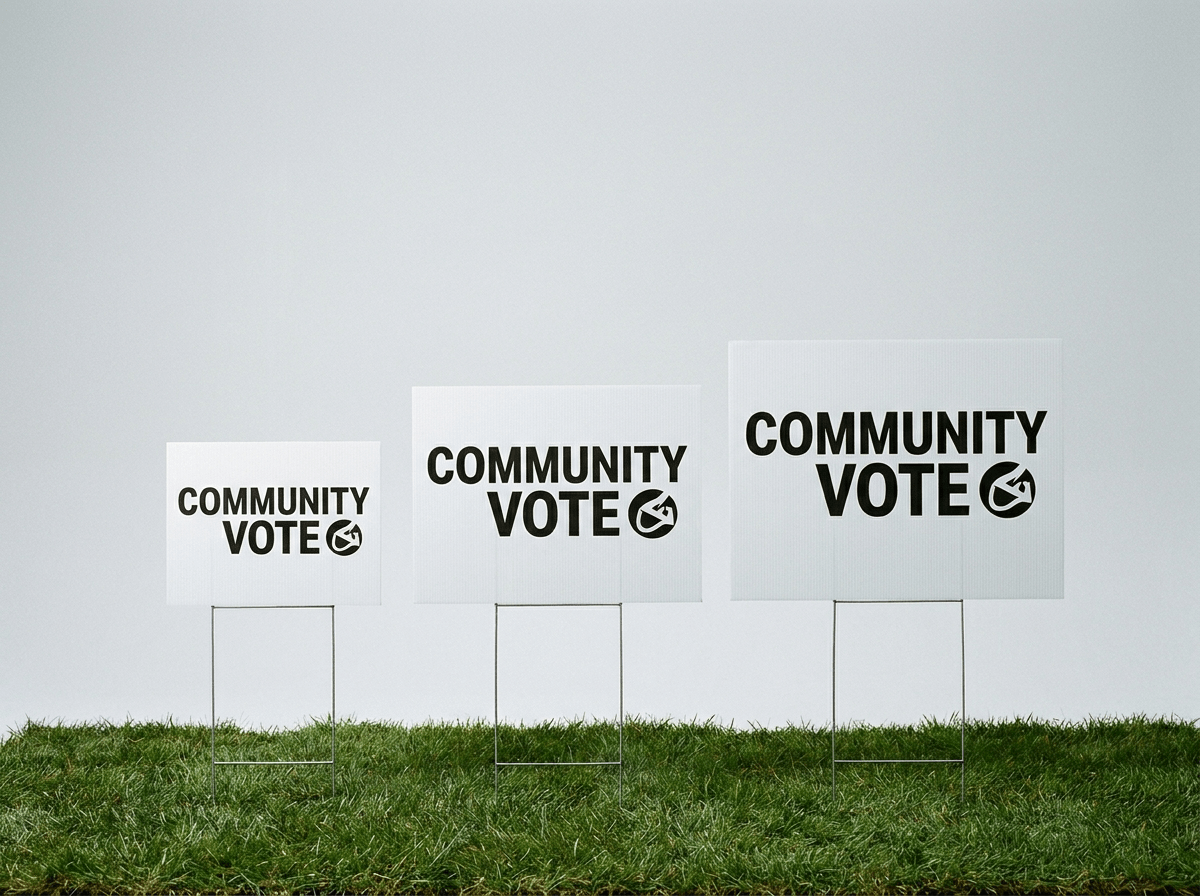
Every yard sign question comes down to one number: how far away is the person who needs to read it? Get that right and the size picks itself.
The standard sizes and what they're for
18×24 inches is the default, the size of nearly every real estate and campaign sign in America. It reads from a car moving at neighborhood speed, ships cheap, and one wire H-stake holds it.
12×18 is the directional: parking arrows, garage sale pointers, open house trails. Cheap enough to scatter ten along a route.
24×18 is the same area as the standard turned landscape, which fits a long name or a wide logo better than the portrait cut.
24×36 is the roadside size, for construction sites, grand openings and anywhere traffic passes at 40 mph instead of 20. Below this size, highway traffic reads nothing but your two biggest words.
The letter-height rule
Sign makers use a simple ratio: one inch of letter height per ten feet of reading distance. A porch visitor at 30 feet reads 3-inch letters fine. A driver 150 feet out needs 15-inch letters, which no 18×24 sign can carry along with a phone number. That is the whole argument for cutting your message down: name, one line, number. A sign that says less gets read more.
Material and stakes
The sheet itself is 4mm corrugated plastic, waterproof and light, with vertical flutes that a 10×30 inch wire H-stake slides into. Print both sides whenever the sign stands perpendicular to traffic, which is most of the time; a one-sided sign is invisible to half the street.
Quick answer
Pick 18×24 unless you have a reason not to: 12×18 for directionals, 24×36 for fast roads. Size the letters at an inch per ten feet of distance. Then order from our custom yard signs page, or see political campaign posters if November is the deadline. Poster sizing for walls instead of lawns is covered in the standard poster sizes guide.
Ready to print your packaging?
Get an instant quote in minutes — low minimums, fast turnaround, and finishes that make your brand pop.