

Stand-up pouch sizes: a guide with capacities

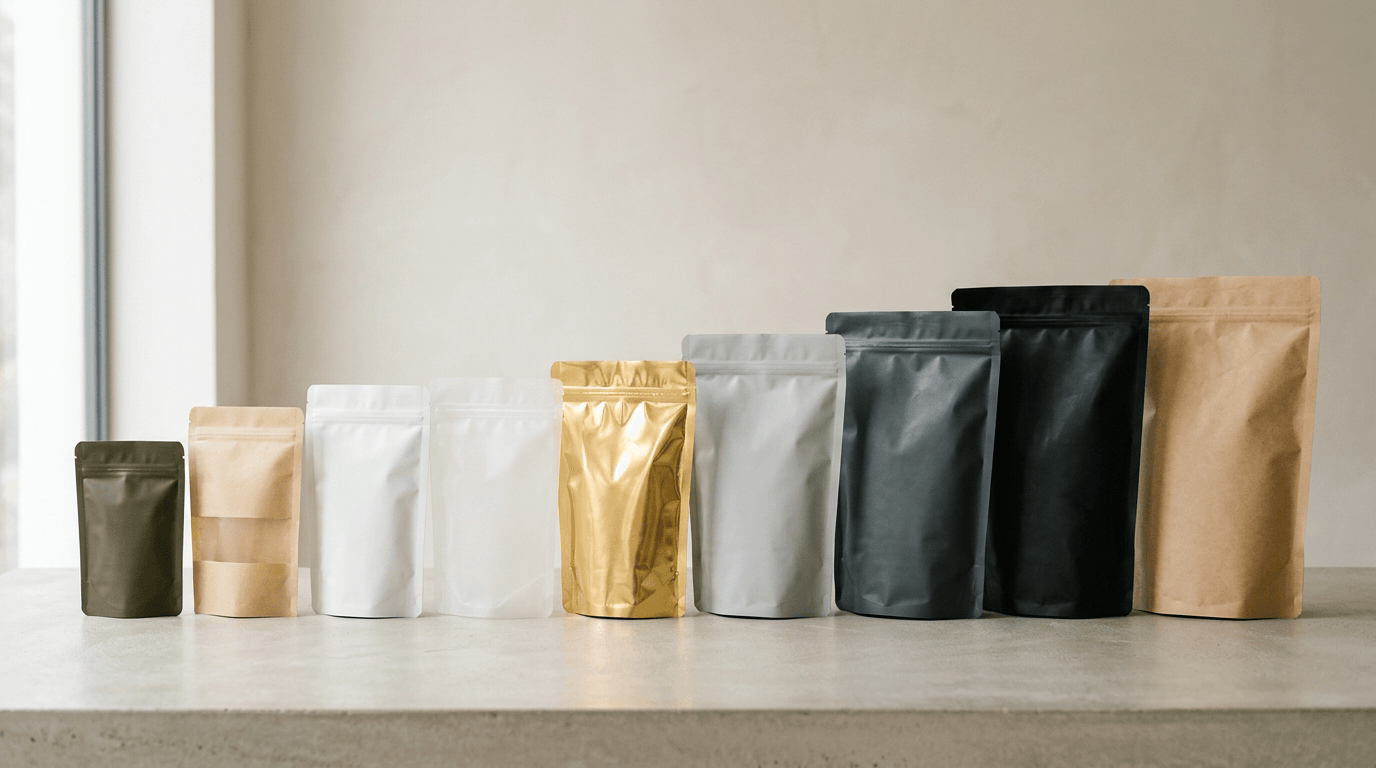
Picking a stand-up pouch size sounds simple until you realize a bag measured in inches has to hold a product measured in ounces, and the two don't map neatly. A pouch that looks right on paper can end up half-empty or bursting.
Here's how the common sizes translate into real capacities, and how to choose without ordering samples of everything.
The catch: dimensions vs capacity
A pouch is sold by its flat dimensions (width x height), but what fills it is volume, and volume depends on the product's density. The same 6 x 9 inch pouch holds about 1 lb of coffee beans but closer to 2 lb of a dense powder like protein. So always match the pouch to your specific product's weight and bulk, not just a generic "1 lb bag."
Common stand-up pouch sizes
These are the sizes most makers use, with rough capacities for a medium-density product like coffee or granola:
- 3.5 x 5 in — samples, spice, 1-2 oz
- 4 x 6 in — single-serve, tea, 2-4 oz
- 5 x 8 in — 8 oz / half a pound
- 6 x 9 in — 1 lb, the most common retail size
- 7 x 10 in — 1.5 lb
- 8 x 12 in — 2 lb
- 10 x 14 in — 5 lb bulk
Bag height includes the sealed top and the bottom gusset, so the usable fill height is a little less than the stated dimension. If your fill looks marginal between two sizes, size up.
Fill line and headspace
Don't fill a pouch to the brim. It needs headspace, roughly 20-30% of the height, so the zip seals cleanly and the bag stands properly. A pouch packed to the top bulges, won't stand straight, and stresses the seal. This is the most common sizing mistake: choosing a bag that fits the product exactly with no room to close it.
Density changes everything
Two products of the same weight can need very different bags:
- Coffee beans are bulky and light, they need a taller bag for the weight.
- Ground coffee or flour packs denser, so it fits a smaller bag at the same weight.
- Gummies or granola trap air, size up for the bulk.
If you're not sure, weigh your product into a measuring jug to get its volume, then match that volume to the pouch, rather than trusting the "1 lb" label on a generic size.
Features that affect size choice
A degas valve (for coffee) and a zip both sit near the top and eat a little fill height. A bottom gusset determines how wide the base spreads, wider gussets stand more stably when full. If you want a window to show the product, leave room in the layout for it.
Picking your size
Work from the product out: weigh a real serving, note how bulky it is, add headspace, and match that to the nearest pouch up. For most retail food products, the 6 x 9 inch (1 lb) and 5 x 8 inch (8 oz) sizes cover the bulk of orders.
When you're ready to print, our stand-up pouches come in all these sizes with zip, valve and window options. For high-barrier storage, see custom mylar bags.
FAQ
What size stand-up pouch holds 1 lb of coffee?
A 6 x 9 inch pouch is the standard 1 lb coffee bag. Whole beans are bulkier than ground, so if you roast light-and-airy, consider 7 x 10.
How full should I fill a stand-up pouch?
Leave 20-30% headspace so the zip seals and the bag stands. Filling to the top stresses the seal and makes the pouch bulge.
Do the dimensions include the gusset?
Width and height are the flat measurements; usable fill height is a bit less because of the top seal and bottom gusset. Size up if you're on the edge. Get a quote.
Ready to print your packaging?
Get an instant quote in minutes — low minimums, fast turnaround, and finishes that make your brand pop.