

Paper grades explained: a guide for packaging

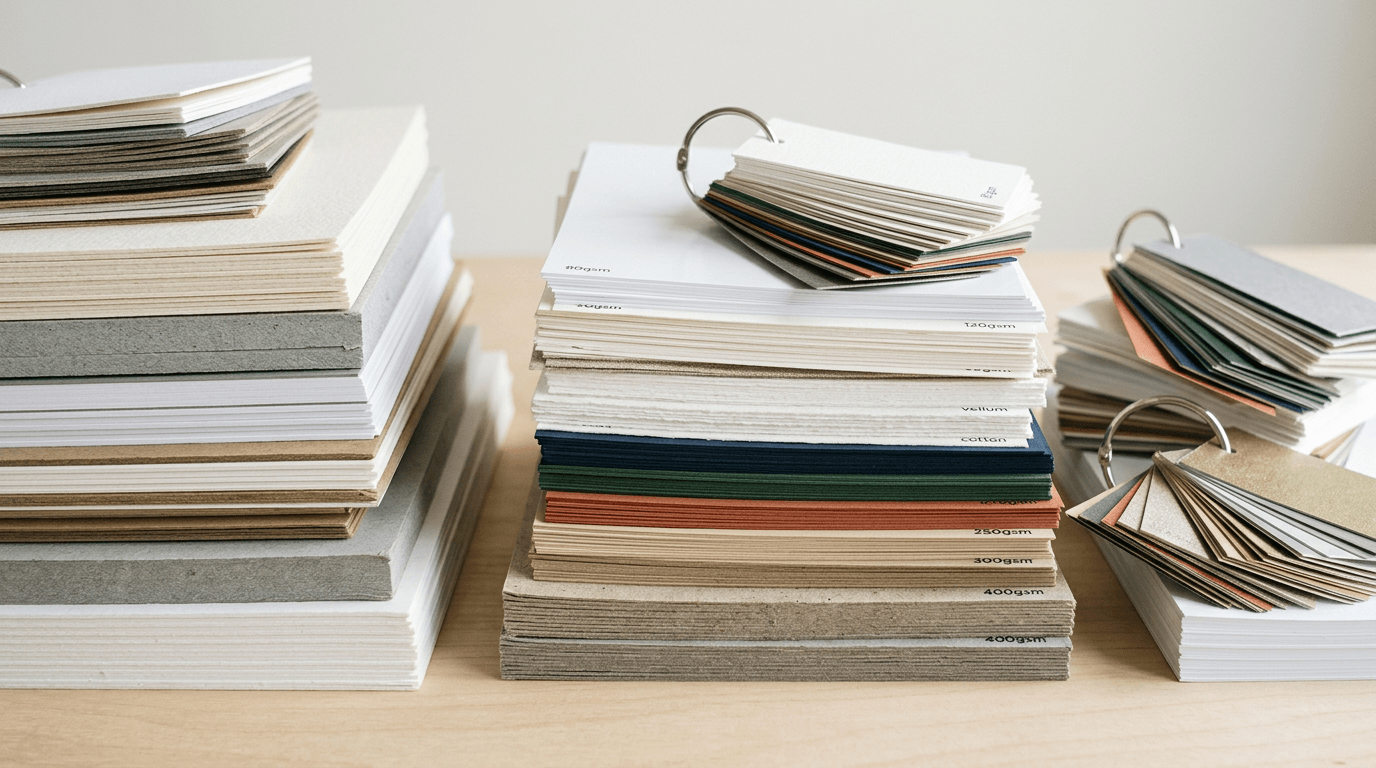
"What paper grade should this print on?" is one of the first questions a packaging job runs into, and the answer decides how the finished piece looks, feels and holds up. Paper grade is just a way of naming a paper by its makeup and intended use, and once the main grades make sense, specifying a job gets a lot easier.
How paper is measured
Two systems come up constantly, and they measure different things.
GSM (grams per square meter) is the metric weight of the paper: how much a square meter of it weighs. Higher GSM means heavier, usually thicker, stock. Office paper is around 80 gsm; a business card is 300-400 gsm.
Points (pt) measure thickness, not weight. One point is one-thousandth of an inch. A 14pt card is 0.014 in thick. Points are common for paperboard and cartons in the US.
Weight and thickness usually track together, but not always, a bulky, airy stock can be thick without being heavy. When in doubt, ask for a physical sample rather than trusting a number.
The main packaging grades
SBS (solid bleached sulfate). A premium, bright-white paperboard. Smooth, clean and great for full-color print, which is why it is the default for cosmetics, food and retail cartons. Comes in weights from around 12pt up.
CUK / kraft board. Unbleached, brown, natural-looking board. Strong and cheaper than SBS, with an earthy look that suits eco and artisan brands. Prints well in one or two colors; full color sits over the brown base.
Chipboard. Recycled grey board, the stuff behind a notepad or inside a cereal box's rigid setup box. Cheap, rigid, not pretty on its own, so it is usually wrapped or laminated with a printed sheet.
Corrugated. Fluted board sandwiched between liners, the classic shipping-box material. Graded by flute (A, B, C, E, F, from thick to thin) and by burst or edge-crush strength. Thin flutes suit retail boxes; thick and double-wall suit heavy freight.
Folding boxboard (FBB). A layered board with a bright top and a bulky middle, common in European cartons. Light for its stiffness and good for print.
Which grade for which job
- Retail cartons, cosmetics, food boxes — SBS for bright print, or FBB for a lighter carton.
- Eco and artisan packaging — kraft board, for the natural look and lower cost.
- Rigid gift and setup boxes — chipboard core, wrapped in a printed sheet.
- Shipping boxes — corrugated, flute chosen by weight and stacking needs.
- Labels and tags — lighter coated or uncoated stocks, chosen by finish.
Coatings change everything
Grade is only half the story; the coating on top changes how a paper prints and performs. A gloss or matte coat sharpens color and adds durability. A soft-touch coat feels premium. An uncoated stock takes ink into the fiber for a natural, tactile look but less color pop. Grease-proof and moisture coatings matter for food. So a spec is really grade plus coating, together.
Getting it right for your package
The practical path is to work backward from the package. Decide what it holds, how it ships, and how premium it should feel, and the grade follows. A kraft box leans on kraft board; a cosmetic box wants SBS with a finish; a shipping box wants the right corrugated flute.
FAQ
What is the difference between GSM and points?
GSM measures weight; points measure thickness. They usually rise together but are not the same, a thick stock can be light and vice versa.
Which grade is most eco-friendly?
Recycled kraft and chipboard use recycled fiber and are recyclable. Uncoated stocks are the easiest to recycle and compost.
What grade should I use for a food box?
SBS or FBB with a food-safe, often grease-resistant, coating. Get a quote and we will recommend a grade for your package.
Ready to print your packaging?
Get an instant quote in minutes — low minimums, fast turnaround, and finishes that make your brand pop.