

Mason jar sizes: a complete guide with dimensions

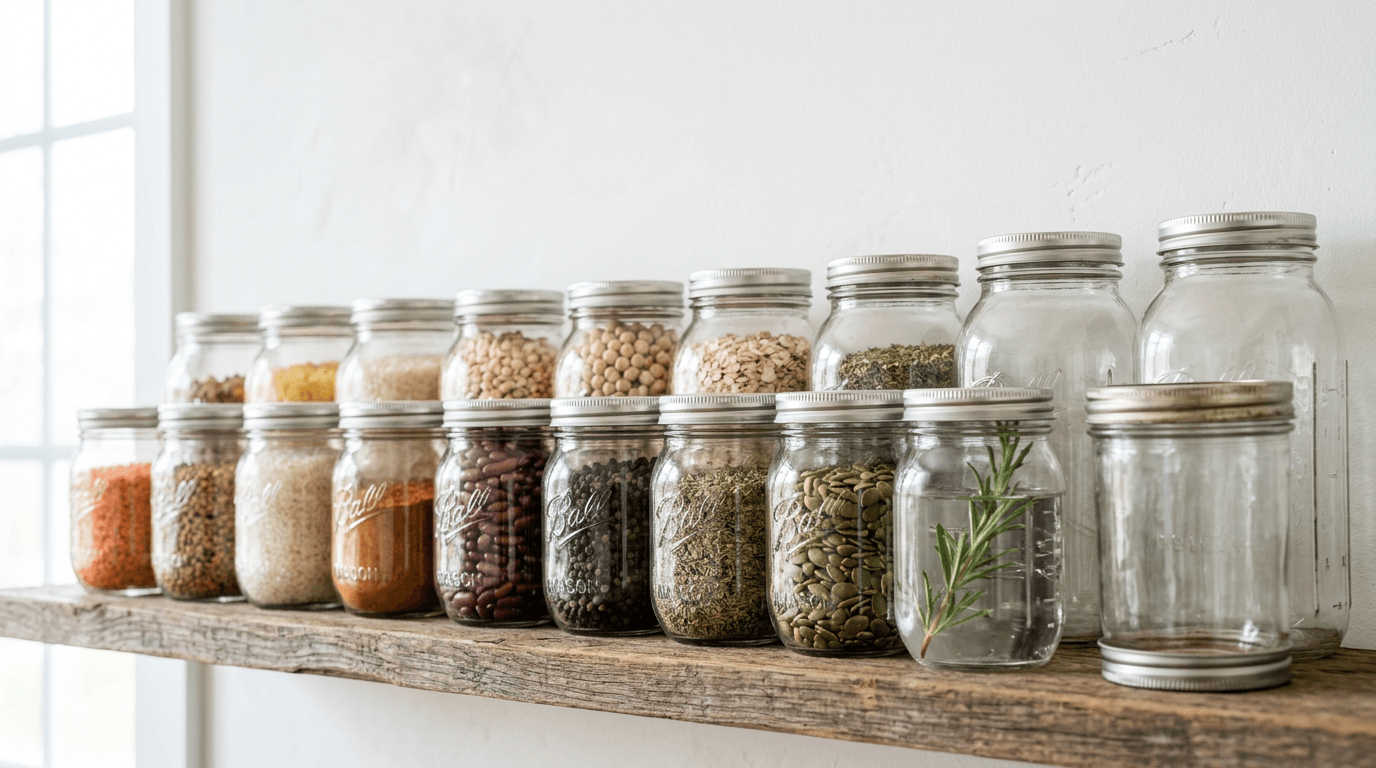
If you have ever stood in a kitchen aisle trying to work out whether you need a pint or a quart, you are not alone. Mason jars come in a handful of standard sizes, and once you know them, canning, storing and gifting all get easier.
Here is the full range, what each size measures, and where each one earns its place.
The standard mason jar sizes
American mason jars are sold by volume, usually in ounces, and the same volumes show up across the main brands. These are the common ones:
- 4 oz (quarter-pint) — about 3.25 in tall, 2 in across. Jams, spices, party favors.
- 8 oz (half-pint) — about 4 in tall, 2.75 in across. Jams, sauces, single-serve preserves.
- 12 oz — about 4.75 in tall, 2.75 in across. A tall half-pint, good for drinks and dressings.
- 16 oz (pint) — about 5 in tall, 3 in across. The all-rounder: pickles, salsa, drinks, dry storage.
- 24 oz (pint and a half) — about 6.5 in tall, 3 in across. Overnight oats, larger sauces.
- 32 oz (quart) — about 6.9 in tall, 3.9 in across. Canning vegetables, cold brew, bulk dry goods.
- 64 oz (half-gallon) — about 9.5 in tall, 4 in across. Juices, kombucha, large-batch storage.
Heights and diameters vary slightly by brand and by whether the jar is regular or wide mouth, so treat the numbers as close guides rather than exact specs.
Regular mouth vs wide mouth
Every size above comes in two opening styles, and the choice matters more than the size for some jobs.
A regular mouth jar has an opening around 2.4 in across, with shoulders that taper in near the top. The narrower neck pours cleanly and the shape suits liquids and anything you tip out.
A wide mouth jar has an opening around 3 in across and straight sides all the way up. That makes it easy to fill, easy to reach into with a spoon, and easy to clean. Wide mouth wins for chunky foods, overnight oats, and anything you scoop.
The lids are not interchangeable between the two, so pick a mouth style and stick with it for your rings and lids.
Which size for which job
Canning and preserving. Half-pints and pints for jams, jellies and salsas; quarts for vegetables, pickles and sauces. Half-gallons are generally not recommended for water-bath or pressure canning most foods, they are best kept for cold storage.
Where jars meet packaging
If you sell what goes in the jar, the jar is only half the package. A branded lid, a printed jar label and the right box turn a plain mason jar into a retail product. For candles, cosmetics and food jars, labels that fit the curve and survive handling do most of the work.
Shipping filled jars is its own problem: glass is heavy and breaks. A box with dividers keeps jars from knocking together in transit, and a snug mailer stops them shifting.
FAQ
Are mason jar sizes standard across brands?
The volumes (pint, quart, and so on) are standard, but exact heights and diameters vary a little between brands. Lids and rings within the same mouth style are usually cross-compatible.
Can I use any mason jar for canning?
Use jars sold as canning jars and inspect them for chips. Decorative or drinking jars are not always tempered for the heat of canning.
What size holds a standard drink?
A 16 oz pint is the classic mason-jar drink size; 12 oz suits a smaller serve, 24 oz a large one.
Selling a jarred product? See our jar labels and custom bottle labels, or get a quote.
Ready to print your packaging?
Get an instant quote in minutes — low minimums, fast turnaround, and finishes that make your brand pop.