

What is a belly band in packaging?

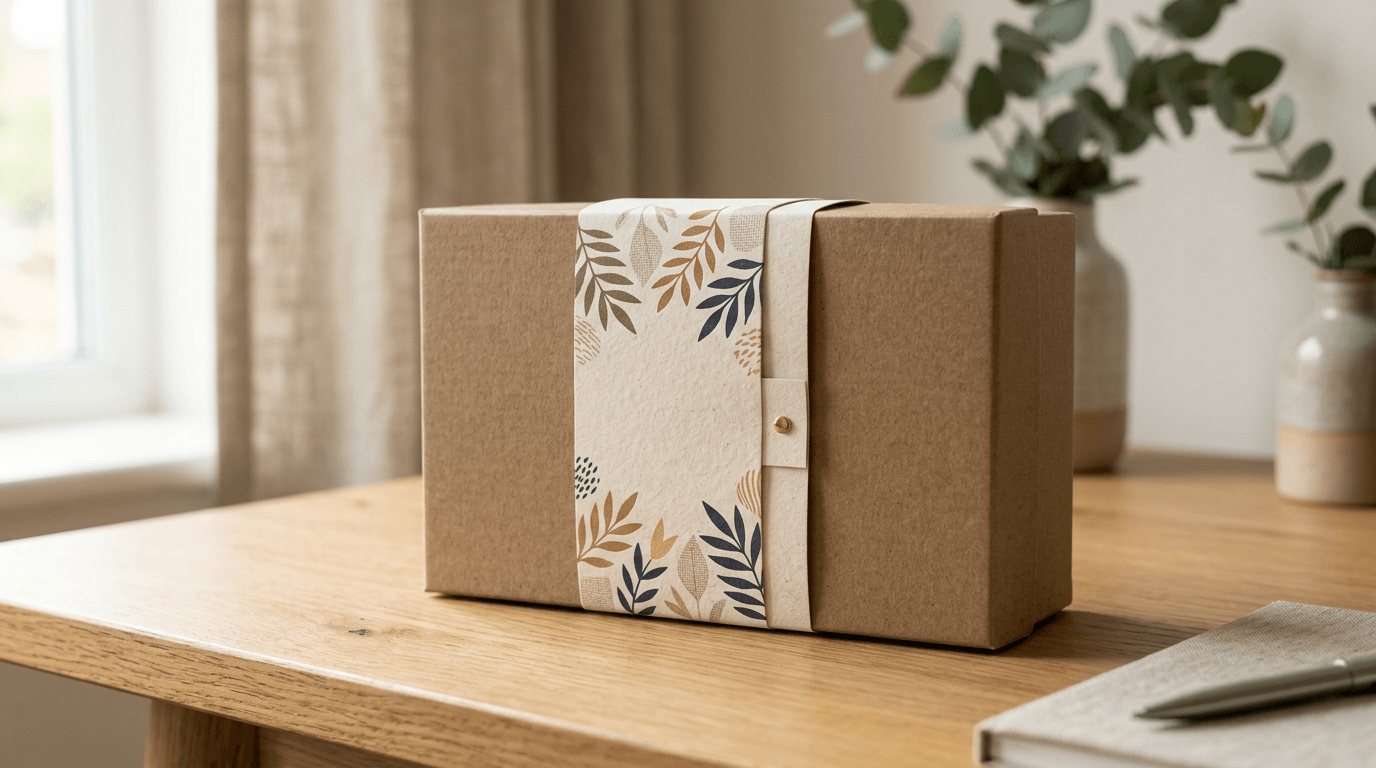
If you've ever bought a notebook held together by a paper strip, or a subscription box wrapped with a band of printed kraft, you've handled a belly band. It's one of the cheapest, most flexible pieces of packaging there is, and most people don't know it has a name.
What a belly band actually is
A belly band is a strip of paper or card that wraps around the middle ("belly") of a product, a box, or a bundle of items. It's not a container, it doesn't hold anything in on its own. Its job is to brand and secure: carry your logo and message, and hold a bundle or a plain box closed.
Think of it as a label that goes all the way around, or a box sleeve without the box.
What belly bands are used for
They show up across a lot of industries because they're so cheap and adaptable:
- Branding a plain box. Wrap a printed band around a bare kraft box and it looks designed, for a fraction of a fully printed box.
- Bundling products. Hold a stack of soaps, notebooks, coasters or cards together as a set.
- Subscription and gift boxes. A band across the tissue is the first thing the customer sees when the lid comes off.
- Retail sleeves. Wrap a towel, a blanket or a candle with product and care info on the band.
- Menus and stationery. Keep a rolled or folded item closed.
Why brands use them
The appeal is almost entirely cost. A belly band is a strip of paper, so it's a fraction of the price of a printed box or full wrap, yet it delivers most of the visual branding. For a small maker, wrapping plain packaging in a printed band is the highest-impact packaging dollar available, professional-looking branding without the cost of custom boxes.
They're also low-commitment: you can change a band's design between runs cheaply, so seasonal or limited editions are easy.
How a belly band closes
There are two common ways:
- Glued loop. The band is glued into a seamless ring at the factory. It looks cleanest, no visible join, and the customer slides the product out or tears the band.
- Tuck close. The band has a die-cut tab that tucks into a slot, so it can be opened and reused. Good when you want the customer to keep the packaging.
Sizing a belly band
Two measurements matter: the circumference (all the way around the item, plus overlap for gluing) and the width (how tall the band is). Wider bands carry more information and feel more substantial; slim bands look minimal and modern. Measure the item at its widest point and add about half an inch of overlap for the glue seam.
When a belly band is the right choice
Reach for one when you want branding and a bit of structure but don't need a full container, or when budget rules out printed boxes. If the product needs protection in transit, a band isn't enough on its own; pair it with a box or mailer.
Ready to design one? See our belly band packaging, or pair it with product boxes and custom tissue paper.
FAQ
What is a belly band used for?
To brand and secure a product, box or bundle, a printed paper strip that wraps around the middle, carrying your logo and holding items together.
How wide should a belly band be?
Whatever suits the message and the item, 2 inches for minimal, 3-4 inches when you need room for text. Match it to the product's proportions.
Are belly bands cheaper than boxes?
Much cheaper, they're a strip of paper, so they deliver branding at a fraction of a printed box's cost. Get a quote.
Ready to print your packaging?
Get an instant quote in minutes — low minimums, fast turnaround, and finishes that make your brand pop.